
Polymer Piping Systems
made of PVC (PVC-U)
Unplasticized polyvinyl chloride — a versatile and cost-effective material for transporting acids, alkalis, salts, organic compounds and drinking water in industry and utilities.
Technical parameters of PVC (PVC-U)
FIP Spa manufactures products from unplasticized PVC (PVC-U) that comply with the UNI EN 1452 standard, as well as the requirements of DIN 8063 and EN ISO 15493 for plastic industrial piping. In Ukraine, the products are certified under the UkrSEPRO system.
| Operating temperature | 0°C to +60°C |
| Diameter range | d16 to d315 |
| Operating pressure | up to PN16 |
| Connection method | Solvent cement, threaded, flanged |
| Material | Unplasticized PVC-U |
| Service life | 50+ years |
| Standard | UNI EN 1452, DIN 8063, EN ISO 15493 |
| UA certification | UkrSEPRO |
Important: the reliability and durability of PVC piping systems depend directly on the quality of the raw materials used. FIP Spa uses only top-grade raw materials.

Resistance to corrosion and aggressive media


PVC is recommended for use with drinking water and food products, treated and untreated water, demineralized water — in accordance with current national and international standards.
- Resistant to most mineral acids, bases and aqueous salt solutions
- Resistant to fats, oils, petrol (benzene-free) and sodium hypochlorite
- High thermal stability in the 20–50°C range with a low coefficient of thermal expansion
Consistency, easy installation and durability
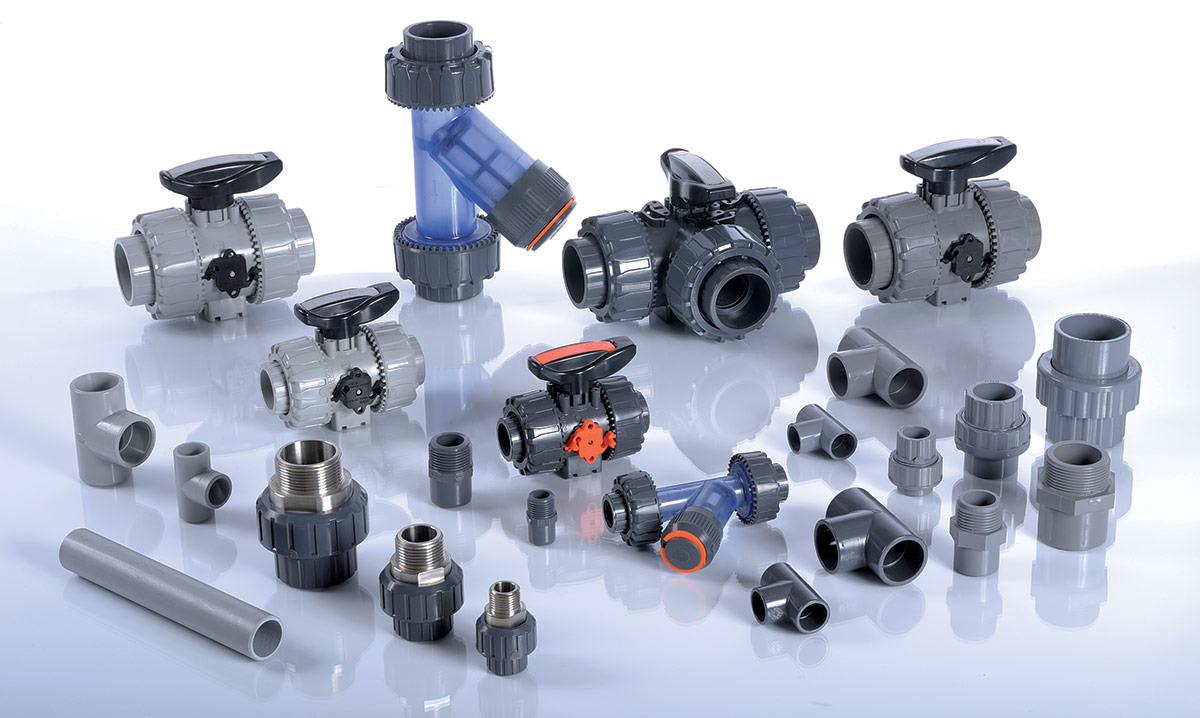
All PVC pipes, fittings and valves are manufactured from the same materials — pipes, fittings and valves share identical physical and chemical properties. This eliminates galvanic corrosion and ensures predictable system behavior.
- Solvent cementing — requires no special skills or welding equipment
- Threaded and flanged connections for any configuration
- Significantly lower installation costs compared to metal systems
- Light weight — convenient for transport and installation in confined spaces
The minimum required strength MRS = 25.0 MPa at 20°C ensures an exceptionally long service life of the piping system with no signs of mechanical or physical wear for 50+ years.


Where PVC systems are used


Water treatment and purification
Demineralized and deionized water, acid solutions, concentrated sulfuric acid — the main media found in water treatment plants. High resistance to aggressive media and no scale buildup.
PVC · PPPool piping
Light weight, easy installation, reliability and a flawless appearance. Full range available: fittings, pipes, valves, rotameters and flow meters.
PVCGreenhouses and agriculture
Equipment piping, mixing units, drip irrigation, manure removal systems, drinking water and feed supply in livestock farming. Biologically inert and do not support bacterial growth.
PVCChemical industry
Transport of aggressive liquids, mineral acids, bases, aqueous salt solutions, fats and sodium hypochlorite. Meets safety requirements and ensures cost-effective maintenance.
PVC · CPVC · PPAdvantages of PVC over metal piping
Chemical resistance — no electrochemical corrosion or scale buildup on the walls
Lower overall system cost (components + installation) compared to metal piping
Low maintenance costs — eliminates the need for expensive metal-polymer combination devices
Low thermal conductivity — minimizes heat loss and energy consumption
High smoothness of the inner surface reduces pump energy consumption
Light weight — simple, fast installation and easy maintenance
Safety — complete absence of metal parts in shut-off valves
Environmental friendliness — no corrosion or chemical reaction between the material and the liquid
Need a PVC system
for your project?
We will select the material, diameters and connection type for your medium, temperature and pressure.
