
Polymer Piping Systems
made of CPVC
Chlorinated polyvinyl chloride — a premium solution for conveying hot aggressive liquids at temperatures up to 100°C. The TemperFIP100® system from FIP Spa, based on Corzan™ resin by Lubrizol.
CPVC — an independent polymer with unique properties
CPVC is produced from PVC through chlorination and is an independent polymer. Since 1986, FIP Spa has been manufacturing the first CPVC piping system designed exclusively for industrial use — TemperFIP100®, based on Corzan™ resin.
| Operating temperature | 0°C to +100°C (working up to 95°C) |
| Diameter range | d16 – d225 |
| Operating pressure | up to PN16 at 20°C |
| Thermal conductivity | 0.16 W/m°C (ASTM C177) |
| Water absorption | 0.07% at 23°C (ASTM D 570) |
| Ignition temperature | 482°C |
| Fire resistance UL94 | VO, 5VB, 5VA |
| Connection method | Solvent cement, threaded, flanged |

.png)
Resistance to corrosion and aggressive media
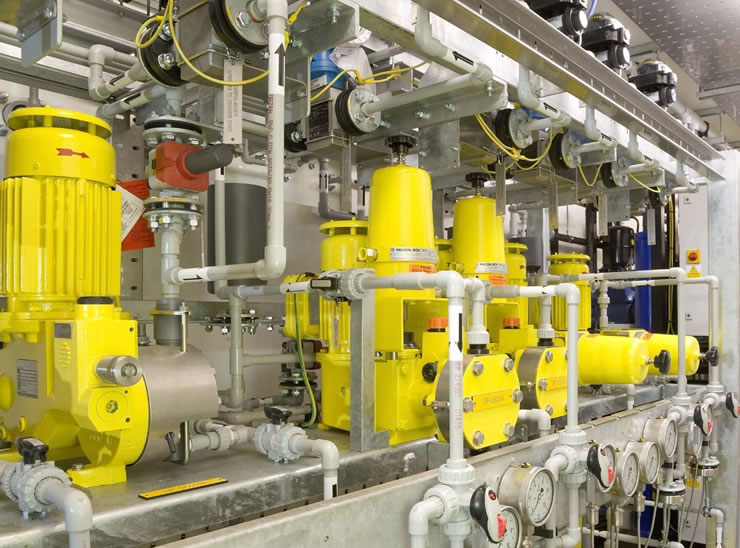
.jpg)
The CORZAN™ resin is CPVC produced by chlorinating PVC homopolymers. It provides high chemical resistance to particularly strong inorganic acids, organic bases, salt and alkali solutions, and paraffinic hydrocarbons at a maximum working temperature of up to 100°C.
- Strong inorganic acids (HCl, H₂SO₄)
- Organic bases and alkalis
- Salt and alkaline solutions
- Paraffinic hydrocarbons
- Sodium hypochlorite NaOCl
Inertness to electrochemical corrosion ensures reliable transport of hot sanitary water in standard systems and solar panels with no risk of corrosion or scale buildup.
Thermal, mechanical and physical properties
Higher flow capacity — smaller pipe diameter


The high strength of CPVC pipes allows them to withstand PN16/25 pressure with a thinner wall — this significantly increases flow capacity at the same outer diameters compared to other plastic pipes.
- The ability to use pipes of a smaller diameter compared to other plastic systems while maintaining the same flow rates
- Reduced material costs — smaller diameter, lower price
- Lower costs for pumps and other equipment due to better hydraulic performance
- Increased flow volume through the nominal diameter with proper hydraulic design
- Low thermal conductivity reduces heat loss and energy consumption
Where CPVC systems are used
CPVC TemperFIP100® — the optimal choice where PVC can no longer cope due to temperature or media aggressiveness, and PVDF is an unnecessary and overly expensive solution.
Chemical industry
Conveying concentrated acids and alkalis at elevated temperatures. Process piping for reactors, condensers, cleaning modules and washing lines.
up to +95°C · HCl · H₂SO₄ · NaOHElectroplating and surface treatment
Concentrations up to 40% chromic or 95% sulfuric acid at temperatures up to 93°C. Piping for pickling and electroplating baths with no metal parts.
Pickling · Anodising · DegreasingWater treatment plants
CIP cleaning systems with aggressive chemicals, demineralized water, regeneration of ion exchange resins with acids and alkalis.
CIP cleaning · Ion exchangePulp and paper industry
Chlorine dioxide, sodium hypochlorite, sulfuric acid, caustic soda — CPVC Corzan™ systems for pulp bleaching significantly outperform metal alternatives in service life.
ClO₂ · NaOCl · H₂SO₄Food and pharmaceutical industry
CIP systems with aggressive cleaning agents at high temperatures. CPVC is certified for contact with drinking water and complies with sanitary standards.
CIP · Drinking water · Pharma industrySolar panels and hot water supply
Reliable transport of hot water in domestic hot water systems and solar panels. Inertness to electrochemical corrosion is a key advantage.
Solar energyAdvantages of CPVC over metal piping
Chemical resistance — no corrosion where metal degrades within just a few months
Lower system cost — material and installation are significantly cheaper than stainless steel
Thinner wall — higher flow capacity at the same outer diameters
Smaller diameter — correct hydraulic design allows the system diameter to be reduced
Fire resistance — ignition temperature 482°C, UL94 categories VO, 5VB, 5VA
Low heat loss — thermal conductivity 0.16 W/m°C vs ~16 W/m°C for steel
UV resistance — due to TiO₂ in the Corzan™ resin formulation, suitable for outdoor installation
Easy installation — solvent cement and threaded connections without welding or special equipment
Need a CPVC system
for your facility?
We will select TemperFIP100® for your medium, temperature and pressure. Full range of pipes, fittings and valves.
